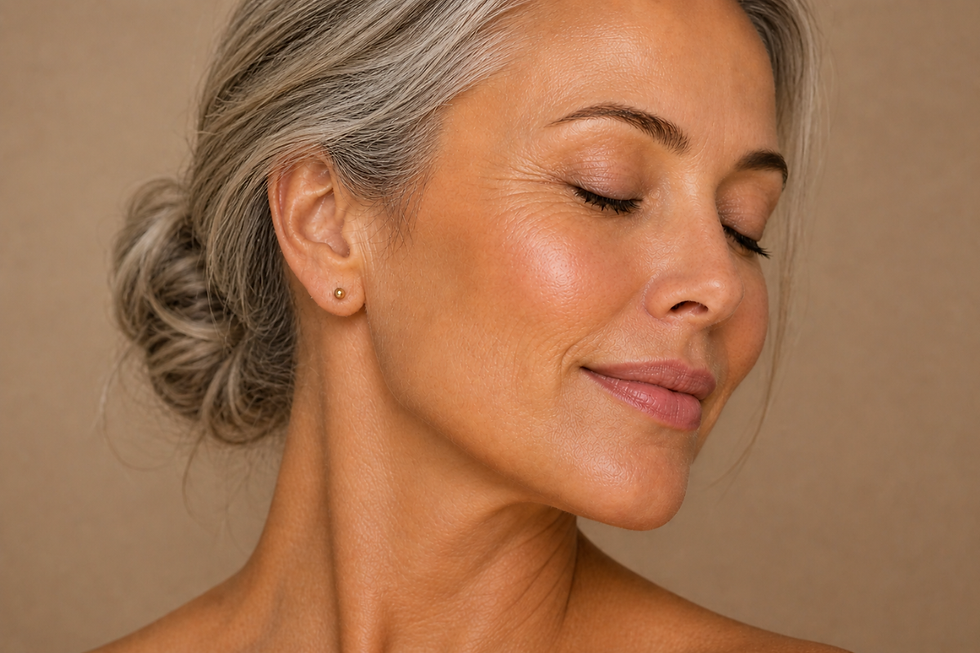
HOW DOES MENOPAUSE AFFECT YOUR SKIN?
In This Guide: Understanding Your Skin Through Menopause
In this month's journal, we explore:
How menopause can affect the skin, and why declining oestrogen can influence skin hydration, collagen, elasticity and skin thickness.
The skin changes you may notice during perimenopause and menopause, from increased dryness and sensitivity to changes in texture, firmness and fine lines.
Why collagen changes around menopause, what the research actually tells us, and why these changes can look very different from one woman to another.
How your skincare may need to evolve, with a greater focus on hydration, barrier support, sun protection and carefully selected active ingredients.
Which professional treatments may help support menopausal skin, including microneedling and collagen-stimulating treatments, and why treatment should always be guided by what has actually changed in your skin.

Menopause brings many changes to the body, and the skin is no exception. For some women, those changes can feel surprisingly sudden. Skin that has always been relatively balanced may begin to feel dry or more sensitive. Fine lines can become more noticeable, firmness may change, and products that have worked well for years may suddenly seem not quite right anymore. While some of these changes naturally overlap with the ageing process, the hormonal shift that occurs during perimenopause and menopause can also have a direct effect on the biology and structure of our skin.¹ For Menopause Awareness Month, I wanted to look more closely at how menopause affects the skin, the role oestrogen plays, and how we can adapt our skincare and treatments to care for the skin through this stage of life.
What Does Oestrogen Actually Do for the Skin?
Understanding the role of oestrogen can make many of the skin changes experienced during menopause much easier to appreciate. Oestrogen receptors are present within the skin, and oestrogen is involved in a number of processes that contribute to the way healthy skin looks, feels and functions. Research has linked oestrogen with collagen content, skin thickness, elasticity and the skin's ability to retain moisture.¹ As oestrogen levels decline through the menopausal transition, these processes can become less effective, contributing to some of the differences we may notice in the skin.
This happens alongside the ageing process we are already experiencing. We continue to accumulate the effects of time, UV exposure, genetics and our daily lifestyles, while hormonal shifts introduce another influence on collagen, hydration and skin structure. This helps to explain why ageing in women doesn't always feel completely linear. Research looking at biological ageing has found an association between menopause and accelerated biological ageing, suggesting that the menopausal transition represents a significant biological shift rather than simply another passing year.² 4 That doesn't mean every woman will experience the same changes at the same time. Two women of exactly the same age and at the same stage of menopause can have very different skin and therefore need very different advice.
“Menopause isn't a skin type. Two women at exactly the same stage can have completely different skin, which is why the starting point should always be the individual.” Dr Emily Strong, Medical Director of Dr Emily Aesthetics & Rejuvenation
How Does Menopause Affect Your Skin and What Changes Might You Notice?
One of the things I notice is just how differently these changes can present from one woman to another. For some, dryness is the first thing they notice. For somebody else, it may be sensitivity.
Some of the differences you may notice during perimenopause and menopause include:

Dryness and dehydration - Skin may begin to feel tighter, drier or less comfortable than it previously did.
Itching - Itchy skin is a commonly reported complaint during menopause and can be associated with increasing dryness and changes in the skin's ability to retain moisture.
Changes in firmness and elasticity - As collagen and other structural components within the skin change, it may gradually feel less firm or resilient.
Fine lines becoming more noticeable - Reduction in collagen levels, hydration and skin thickness can make existing lines appear more prominent.
Changes in texture - Skin may feel rougher, thinner or simply less smooth and luminous than it once did.
Increased sensitivity - Some women find that products or active ingredients they previously tolerated well begin to feel more irritating.
Skin flushing - Some women experience increased facial flushing or episodes of warmth as changes in oestrogen levels affect the regulation of blood flow within the skin.
Slower wound healing - Skin may take longer to repair following injury as declining oestrogen can affect processes involved in inflammation, collagen production and tissue repair.
Importantly, you may experience only one or multiple of these changes, and they may appear at different stages of the menopausal transition.
Why Can Skin Become Dry and Itchy During Menopause?
Rather than simply affecting how the skin looks, menopause can also impact how it feels. Dryness and itching are common concerns during this stage of life, and there is a biological explanation for why the skin can become less comfortable as oestrogen levels decline.
Oestrogen plays an important role in maintaining the skin's hydration. It influences the production and organisation of glycosaminoglycans, including hyaluronic acid, which help the skin attract and retain water. Oestrogen also contributes to the function of the skin barrier, the outer layer that helps prevent excessive water loss. As oestrogen levels fall, changes to these processes can contribute to reduced skin hydration and a greater tendency towards dryness.4 This can leave the skin feeling tight, rough or less supple than it previously did. Alterations to the skin barrier may also make it more susceptible to irritation, while dryness itself can contribute to itching. Pruritus, or itching, and xerosis, or very dry skin, are both recognised skin complaints associated with menopause.3
For some women, this can create a frustrating cycle. Skin may feel rougher or look duller, prompting the temptation to exfoliate more frequently, introduce another acid or add several active products in an attempt to improve its texture. However, when the skin barrier is already struggling to retain moisture, doing more is not necessarily the answer. Instead, this can be a good time to take a more supportive approach. Reassessing your cleanser, reducing the frequency of potentially irritating active ingredients and introducing products that help replenish and retain moisture can all help to strengthen and repair the skin barrier. For some women, professional treatments designed to improve hydration and overall skin quality, such as skin boosters, may also form part of a personalised treatment plan. The aim is not simply to treat dryness, but to consider what the skin needs as its biology evolves.
The important thing to recognise is that the skincare routine that worked well for your skin in your 30s may not necessarily be the right approach during menopause. As the biology of the skin changes, your skincare and treatment approach may need to evolve with it.
Does Menopause Cause Loss of Collagen?
Collagen is one of the main structural proteins within our skin and plays an important role in its strength, firmness and resilience. As we age, our collagen production naturally declines, but the hormonal changes associated with menopause can significantly alter the rate at which this happens.
Research has reported that women may lose up to around 30% of their dermal collagen during the first five years after menopause, with the rate of loss becoming more gradual thereafter.3

This can help explain why changes in firmness, skin texture and the visibility of fine lines may sometimes become more noticeable over a relatively short period of time. This is one of the reasons why skin ageing can feel as though it has suddenly changed pace. Rather than a steady, predictable decline, there can be periods when changes become more apparent, particularly around significant hormonal transitions such as menopause.4
Understanding this is useful when thinking about how we support the skin over the longer term. Alongside consistent skincare, daily sun protection and good hydration, treatments that improve skin quality and stimulate collagen production can form part of a considered approach to maintaining the skin's structure, firmness and resilience as it changes.
What Is the Best Skincare Routine for Menopausal Skin?

There isn't one skincare routine that is right for every woman with menopausal skin. The best approach is to look at what your skin needs now and build a routine around those individual concerns, rather than simply adding more products or stronger active ingredients.
There are, however, a few foundations that are worth prioritising. Daily broad-spectrum SPF remains one of the most important steps for long-term skin health, helping to protect against UV-related collagen breakdown, pigmentation and photoageing. A moisturiser suited to your skin can help support the skin barrier and maintain hydration, while antioxidant ingredients such as vitamin C may help protect against oxidative stress and support a brighter, more even complexion.
The next step is choosing active ingredients according to what you want to improve. Retinoids, including retinol, are among the best-studied topical ingredients for photoageing. They can support collagen production, improve skin texture and reduce the appearance of fine lines and pigmentation.⁶ However, menopausal skin may be less tolerant of irritation, particularly if it is already dry or sensitive. This means that using a retinoid is not simply about choosing the strongest product you can tolerate. The concentration, frequency of use and the combination of products within your routine all matter. Introducing a retinoid gradually and allowing the skin time to adapt can be more beneficial than using too much too quickly.
The same principle applies to exfoliation and other active ingredients. If your skin has become more reactive, increasing the number of acids or exfoliating products may not improve it and could further compromise its comfort. A more considered approach is to establish a well-tolerated foundation first, then introduce targeted actives according to your individual concerns and how your skin responds.
This is why I don't believe there is a single “menopausal skincare routine” that everyone should follow. One woman may be primarily concerned with dryness and sensitivity, while another may want to address pigmentation, uneven texture or fine lines. Someone else may notice several of these concerns at once. Your age or menopausal stage alone doesn't tell us what your skin needs.
When I see a patient, I look at what has actually altered and what they would most like to improve. From there, we can decide whether the priority is hydration and barrier health, pigmentation, texture, collagen stimulation or a combination of these. Skincare forms the foundation, while professional treatments can be considered where they may complement what can realistically be achieved at home.
Menopause doesn't mean starting your skincare again from scratch. It means understanding what your skin needs now and adapting your routine accordingly.
"Menopausal skin doesn't necessarily need more products. It needs the right products for what has changed." Dr Emily Strong, Medical Director of Dr Emily Aesthetics & Rejuvenation.
What Are the Best Treatments for Menopausal Skin?
Skincare can provide an important foundation, but for some women it may not be enough to address the changes they are noticing. This is where professionally delivered treatments can complement a good home routine, particularly when the focus is on improving skin quality rather than simply adding volume or changing facial shape.
The most appropriate treatment will depend on the particular concern. For women noticing changes in texture, fine lines, firmness or overall skin quality, SkinPen microneedling can be a useful way to stimulate the skin's natural regenerative processes. Microneedling creates controlled micro-injuries within the skin, triggering the body's natural wound-healing response and stimulating processes involved in tissue remodelling and collagen production. A 2025 systematic review evaluating microneedling for facial rejuvenation included 21 studies involving 723 patients. It reported improvements across outcomes including wrinkling, skin texture, photoageing and skin laxity, alongside high levels of patient satisfaction.7
Where hydration, radiance and overall skin quality are more prominent concerns, skin boosters can offer a different approach. Injectable hyaluronic acid treatments are designed to improve the quality and hydration of the skin rather than primarily creating volume or altering facial shape. Clinical research has reported improvements in measures including hydration, firmness, brightness, texture, radiance and elasticity following injectable hyaluronic acid treatments.⁸
It is also important to recognise that not every change associated with menopause occurs within the skin itself. Over time, there can be changes to the underlying facial tissues, including a loss of volume and structural support. Where this has occurred, dermal fillers can be used to restore volume and definition in areas where it has naturally been lost. When thoughtfully placed, filler can help restore facial proportions, soften the effects of structural ageing and support a refreshed, natural-looking result without changing the character of the face.
Other treatments can be considered where the aim is to stimulate collagen more progressively or address specific concerns such as pigmentation, laxity or changes around delicate areas of the face. In practice, I often find that the most effective approach is not about choosing a single treatment, but considering how different treatments can complement one another over time.
This might mean combining a well-chosen skincare routine with treatments that improve hydration, stimulate collagen production and, where appropriate, restore structural support. The plan can then evolve as the skin responds and the face continues to change. The aim is to work with the way the skin and face are evolving during this stage of life while maintaining a natural, balanced result.
"My role isn't to treat menopause itself. It's to understand how it is affecting an individual woman's skin and face, and then decide what will genuinely benefit her." Dr Emily Strong, Medical Director of Dr Emily Aesthetics & Rejuvenation
Can Collagen-Stimulating Treatments Help During Menopause?

Collagen-stimulating treatments can be particularly relevant during perimenopause and menopause, when the skin may begin to feel less firm and the effects of declining collagen become more apparent. Rather than simply adding hydration or volume, biostimulatory treatments are designed to work within the tissues to encourage new collagen production over time, helping to maintain the skin's structure and resilience.
In clinic, I use treatments including Juvelook, Lenisna and Radiesse, selecting the most appropriate option according to the area being treated, the condition of the skin and the result we are looking to achieve.
Juvelook is a treatment I find particularly interesting for delicate areas such as around the eyes and mouth. It combines poly-D,L-lactic acid (PDLLA), which stimulates collagen production, with hyaluronic acid, bringing together biostimulation and hydration. This makes it particularly suited to areas where the skin is fine and changes in texture and elasticity can become increasingly visible. A prospective 2026 study specifically investigating PDLLA-HA (Juvelook) in the tear trough and under-eye region reported improvements in measures including skin elasticity, hydration and radiance, alongside an overall improvement in under-eye skin quality.⁹ The perioral area is another area where I particularly like to consider Juvelook. Fine lines around the mouth can become more noticeable as collagen levels decline and the skin gradually loses some of its elasticity and resilience. By encouraging collagen production within the skin, Juvelook offers a way to focus specifically on improving the quality, texture and firmness of this delicate area.
“The areas around the eyes and mouth can be some of the first places where I notice a change in skin quality. For me, this is where collagen stimulation can be particularly valuable because we're working with the skin itself rather than simply adding volume.” Dr Emily Strong, Medical Director of Dr Emily Aesthetics & Rejuvenation
This is one of the advantages of taking a longer-term approach to aesthetic treatment during menopause. Rather than focusing solely on what is visible on the surface, we can consider the underlying changes taking place within the skin and select treatments that strengthen its structure, improve its quality and maintain its resilience as it evolves.
The Goal is to Age Well

For me, supporting women through perimenopause and menopause is about recognising that this is a period when the biology of the skin is changing and being proactive about caring for it. For one woman, that might mean rebuilding hydration and strengthening her skincare routine.
For another, it may mean addressing texture, pigmentation or skin quality. For somebody beginning to notice changes around the eyes or mouth, collagen-stimulating treatments may become part of a longer-term plan.
There are now so many ways we can care for and strengthen the skin through this stage while maintaining what makes somebody look like themselves. The goal is healthy, resilient skin that continues to look and feel like you through every stage of life.
“My personal approach to ageing well isn't about trying to stop the clock. It's about supporting the skin and facial structure so that you continue to look like yourself as you move through each of life's stages.” Dr Emily Strong, Medical Director of Dr Emily Aesthetics & Rejuvenation
When Should You Speak to a Practitioner About Changes in Your Skin?

Menopause is only one part of the picture when we look at how the face is changing. The skin, underlying tissues and facial structure all age alongside one another, but they do not necessarily change at the same rate or in the same way. This is why I believe it is important to look at the face as a whole rather than assuming that every concern is simply a result of menopause or can be addressed with one particular treatment.
If your skin suddenly feels unfamiliar, your usual skincare no longer seems appropriate or you're simply unsure what your skin needs at this stage, a professional skin consultation can be a useful place to start. At my clinics in Chelmsford, Essex and Mayfair, London, I look at your skin health, facial anatomy, lifestyle, current skincare and what you would genuinely like to improve. From there, we can determine whether the priority is adapting your skincare, restoring hydration, improving skin quality, supporting collagen production or addressing changes in the underlying facial structure.
There is no single treatment that is right for every woman going through menopause. The most effective approach is one that reflects what is actually happening within your skin and face, while taking into account your individual goals and how you want to look and feel.
Menopause represents a new stage for the skin, but it doesn't mean that healthy skin or natural-looking ageing has to be compromised. With the right skincare, appropriate treatments and a considered long-term approach, we can work with the skin as it evolves, helping to maintain its health, resilience and quality throughout this stage of life.
Reviewed by Dr Emily Strong
Dr Emily has nearly two decades of experience in aesthetic medicine and specialises in natural-looking facial rejuvenation, skin health and bespoke treatment planning.
Clinical Resources
1. Hall G, Phillips TJ. Estrogen and skin: the effects of estrogen, menopause, and hormone replacement therapy on the skin. Journal of the American Academy of Dermatology. 2005;53(4):555–568. doi:10.1016/j.jaad.2004.08.039.
2. Levine ME, Lu AT, Chen BH, et al. Menopause accelerates biological aging. Proceedings of the National Academy of Sciences of the United States of America. 2016;113(33):9327–9332. doi:10.1073/pnas.1604558113.
3. Kamp E, Ashraf M, Musbahi E, DeGiovanni C. Menopause, skin and common dermatoses. Part 2: skin disorders. Clinical and Experimental Dermatology. 2022;47(12):2117–2122. doi:10.1111/ced.15308.
4. Viscomi B, Muniz M, Sattler S. Managing Menopausal Skin Changes: A Narrative Review of Skin Quality Changes, Their Aesthetic Impact, and the Actual Role of Hormone Replacement Therapy in Improvement. Journal of Cosmetic Dermatology. 2025;24(Suppl 4):e70393. doi:10.1111/jocd.70393.
5. Thornton MJ. Estrogens and aging skin. Dermato-Endocrinology. 2013;5(2):264–270. doi:10.4161/derm.23872.
6. Sitohang IBS, Makes WI, Sandora N, Suryanegara J. Topical tretinoin for treating photoaging: A systematic review of randomized controlled trials. International Journal of Women's Dermatology. 2022;8(1):e003. doi:10.1097/JW9.0000000000000003.
7. Foppiani JA, Fanning JE, Beltran K, et al. Microneedling for Facial Rejuvenation: A Systematic Review. Aesthetic Plastic Surgery. 2025;49(17):4949–4960. doi:10.1007/s00266-025-04972-z.
8. Ghatge AS, Ghatge SB. The Effectiveness of Injectable Hyaluronic Acid in the Improvement of the Facial Skin Quality: A Systematic Review. Clinical, Cosmetic and Investigational Dermatology. 2023;16:891–899. doi:10.2147/CCID.S404248.
9. Young SM, Lau EKH. Hybrid Biostimulator and Hyaluronic Acid Injectable for Tear Trough Rejuvenation. Aesthetic Plastic Surgery. 2026;50:5337–5343. doi:10.1007/s00266-026-05817-z.